Wednesday, December 30, 2020

Portraits of Life: Not One of The 51, But A Life No Less Cherished


Shantieya Smith

By Amanda Landwehr 

MISSING, LOST, CAPTURED, murdered… For some, these words will never appear outside of crime T.V. shows and breaking news reports. But for 46-year-old Kristena Hopkins, these words are commonplace in both her personal life and career. 

Where many people might run in the opposite direction from this brand of violence, Hopkins tackles it head-on. Through her involvement in Mothers Opposed to Violence Everywhere (M.O.V.E.), Hopkins is dedicated to her role as director of Missing and Murdered Women.

For Hopkins, it’s personal.

Hopkins was first called to advocacy after her 26-year-old cousin Shantieya Smith—mother of a 6-year-old—was found murdered in 2018. Smith’s body was found badly decomposed beneath a car in an abandoned Chicago garage on the city’s West Side, so unidentifiable that only dental records could prove her identity.


_____________________

_____________________

“Sometimes it does get unbearable,” said Hopkins. “But you have to just keep acting strong. Someone’s gotta do it.”

-Kristena Hopkins, Shantieya's cousin

_____________________

_____________________

An Unforgettable Portrait: By The Numbers

Nancie Walker is among the 51 Unforgotten women 
By Mohammad Samra 
Fifty-one women. Fifty-one lives. Fifty-one women strangled. Fifty-one souls. These are the Chicago women--from Jan. 4, 2001 to Sept. 10, 2018--whose homicides are believed connected to one or more serial killers.

This is a story by the numbers. Just the facts—a numerical summation of the data and analysis compiled by the Alexandria, Virginia-based Murder Accountability Project, which has used a computer algorithm to link the strangulation or asphyxiation murders of 51 Chicago women since 2001 to one or more serial killers.

These are the cold facts. A portrait of this case with no frills, although revelatory and piercing in its numerical simplicity:
_____________________
_____________________

"One hundred percent of them have names. One hundred percent had lives and loved ones. One hundred percent of them had stories."   
-Mohammad Samra

_____________________
_____________________

Coping With Loss: A Mother's Journey Through Grief

The death of Kentayvia Blackful, fatally wounded on the day before her 13th birthday,
has cast her family, like numerous other Chicago-area families into the sea of grief and the journey
of coping with the tragedy of losing a loved one to murder. (Photo provided by family)
By Samantha Latson

It was a warm September day in 2019, and almost the end of summer. It was supposed to be a celebration of life for 12-year-old Kentayvia Blackful who was turning 13 on the morning after. But for her parents Kentnilla, 34, and Trenton Blackful, 34, who were planning for their daughter’s birthday party, a stray bullet that struck Kentayvia in the head altered those plans and forever changed their lives. Kentayvia died the following day on Sept. 25, her birthday, having succumbed to her injuries a day after being shot. 

A week later, on a sun-drenched Indian summer’s day, Kentayvia was laid to rest at St. Mark Missionary Baptist Church in south suburban Harvey. A numbing pall hung over the service like a dark storm cloud as scores of mourners, many of them children and teenagers, gathered to pay their last respects. 

Kentayvia lay in a white casket, wearing a gold tiara, appearing like a sleeping princess. A horse-drawn carriage carried her body to her final resting place.

_____________________

_____________________

“People may say, ‘Oh, it’s been too long. You need to stop grieving and move on.’ But you’re never going to get past the loss of a child."

-Zonia Cooper, whose 26-year-old son was murdered

_____________________

_____________________

Portraits of Life: Beyond Chicago, Evidence of The Toll of Murder Against Women of Color

Jessica Flores

By Nick Ulanowski
SHE WAS MADY PEREZ's sister. A “free spirit.” The “one in my family that always gave the best, big hugs.” She was the sister who gave the kind of big bear hugs that swallow you with a sense of warmth and love and that will forever linger in her family’s memories.

With brown eyes and auburn hair, her younger sister could light up a room when she walked in, Perez recalled. She “trusted easily,” “loved profoundly,” and her laughter was “always filled with life.”

That's who she was. That’s the way her family will always remember her. Not the way police say she was taken from them, from this life and from all of those who loved her. Her name is Jessica Flores.

“No matter what you were going through, no matter what was going on, she had a lot of love,” Perez said, remembering happier times. “She always had that laughter, that deep voice with the big laughter.”


_____________________

_____________________

“She was always a butterfly, protector and went out of her way to make others feel better.”

-Mady Perez, Jessica’s sister

_____________________

_____________________

Tuesday, December 29, 2020

Portraits of Life: Diamond Turner

Diamond Turner

Compiled by Staff

DIAMOND TURNER. Say her name.

Not trash. Not widgets. Not just a statistic. Not forgotten. No, not one of the 51.

Despite the way their killer discarded their breathless brutalized bodies in assorted alleys, vacant lots, abandoned buildings or set ablaze in garbage cans from Chicago’s South Side to the West Side, they are human. 

Not garbage.

A Tale of Women from Two Cities: Separate & Unequal

A memorial to slain Chicagoans on the city's far South Side is a grim reminder of murder's toll.
(Photo: John W. Fountain)

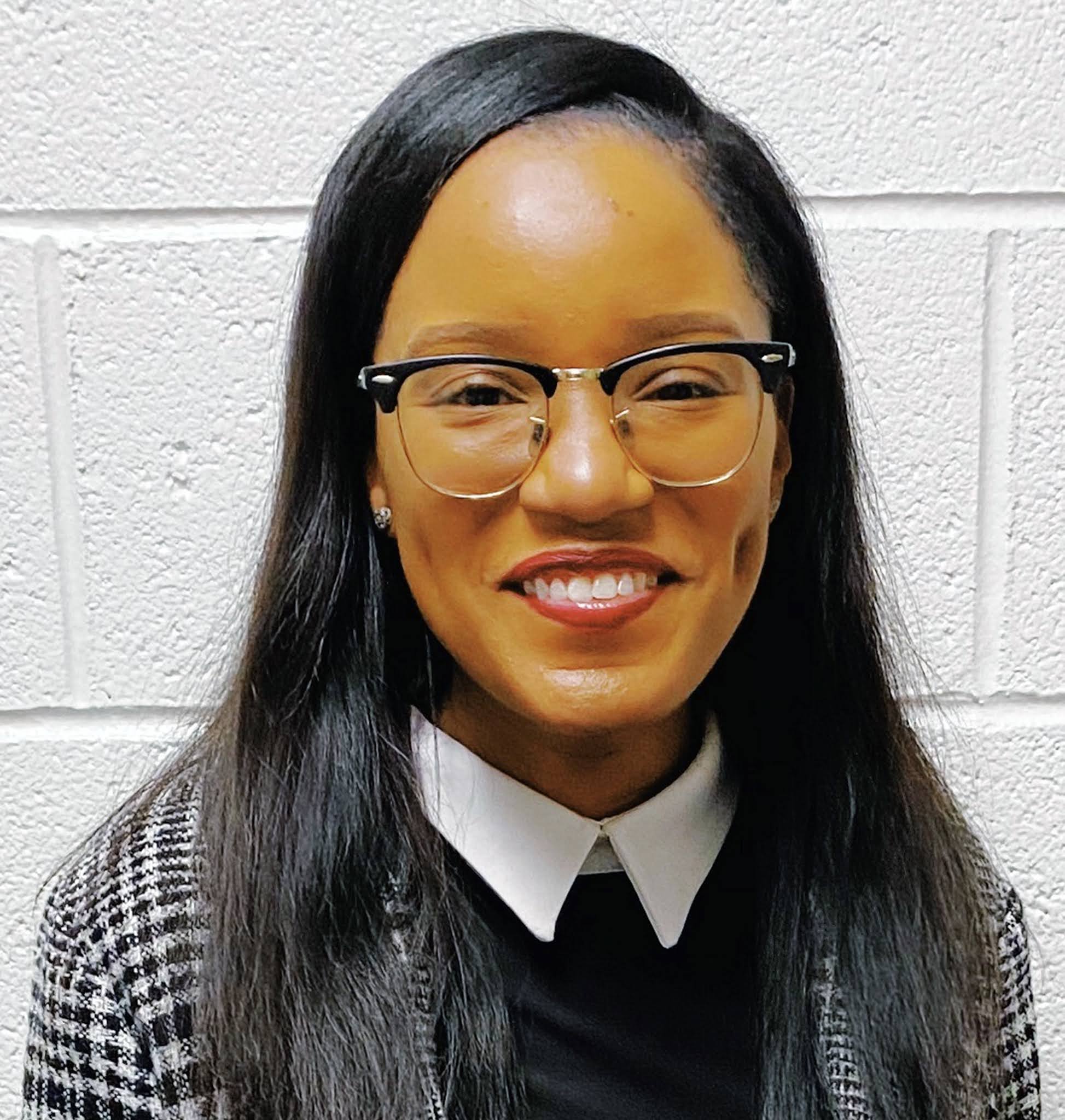
By Sydney Mishler

I grew up in Louisville, Kentucky, in a safe home in a good neighborhood with a loving family. I grew up going to a good school and on Sundays I went to a good church. I grew up with good friends in a city that prioritized community. I grew up seeing lots of people who looked like me and lived like me and thought like me and voted like me. 

At 18 I moved to Chicago for college. At 21, I sat in a classroom as my journalism professor told the class the subject of our capstone project: Fifty-one women strangled in Chicago. Fifty-one women thrown in the garbage like trash. Fifty-one women pinpointed as unworthy to live. 

Fifty-one women who would never go home to their families. Fifty-one women who would maybe never walk down the aisle. 

Tears & Reflections In A Year of Telling “Their” Story

A young woman at a Black Lives Matter protest downtown Chicago last summer holds a sign.
(Photo: Samantha Latson) 

“All I wanna say is that they don’t really care about us” –Michael Jackson, 1995

By Samantha Latson

Samantha Latson
“Nobody cares, nobody gives a damn…” It was a weeping voice filled with frustration and anguish. I looked at the face of a black man crying in front of his students. A man not worried about pride or embarrassment, but worried about the 51 lives who are so often left forgotten. 

I looked at the screen of my classmates, white faces who don’t resemble mine, yet my skin, my body and my face are on the frontline.

While peering into the screen, I said to myself. “Wow, is this man crying for me?” No, not crying for me in a literal sense, but crying for the black women who are so often left neglected, disrespected, crumbled, and tossed to the side. 

America's unwanted is what I call women who look like me. 

Margaret Gomez

Compiled by Staff
MARGARET GOMEZ. Say her name.

Not trash. Not widgets. Not just a statistic. Not forgotten. No, not one of the 51.

Despite the way their killer discarded their breathless brutalized bodies in assorted alleys, vacant lots, abandoned buildings or set ablaze in garbage cans from Chicago’s South Side to the West Side, they are human. 

Not garbage.